

From Zero to Offer: Your First Programming Job
The hardest part of landing your first programming job isn’t the technical interviews. It’s not the portfolio, the resume, or even the nerves. The hardest part is knowing what to do (in what order, with what level of effort) on any given day when the silence from recruiters starts to feel permanent.
Most advice for junior developers landing their first programming job is frustratingly vague. “Build projects.” “Network more.” “Keep applying.” What does that actually look like on a Tuesday morning when you’re staring at 47 browser tabs and wondering if you’re doing any of it right?
This is a concrete, week-by-week, action-oriented roadmap. Four weeks. Specific daily tasks. A clear sequence designed to build momentum, from wherever you are right now to having real conversations with hiring managers.
If you follow it, you won’t be guaranteed a job in 30 days. That’s not a promise anyone should make. But you will be in a fundamentally stronger position than you are today: a cleaner signal, a wider net, and far more confidence walking into interviews. Let’s build that.
Before You Start: The Honest Baseline Assessment
Before week one begins, you need an honest answer to four questions. Don’t rush through them. The entire plan adapts based on where you actually are, not where you wish you were.
Question 1: What can you build right now, without help? Not what tutorials you’ve completed. Not what you’ve watched on YouTube. What can you sit down and actually build from scratch, with documentation open but without copying someone else’s project?
If the answer is “a to-do app and maybe a weather API call,” that’s a real answer. Start there.
Question 2: What does your public presence currently say about you? Open your GitHub profile, your LinkedIn, and your portfolio in three tabs. Look at them like a recruiter who knows nothing about you. What story do they tell? Is there a story at all?
Question 3: How many roles have you applied to, and what happened? If you’ve applied to hundreds of jobs and heard nothing, the problem is likely at the top of the funnel, your materials or your targeting. If you’ve gotten interviews but no offers, the problem is later in the process. Knowing this changes your Week 3 and Week 4 priorities significantly.
Question 4: What’s your actual constraint right now: time, skills, materials, or confidence? Someone with 8 hours a day to dedicate to this plan will execute it differently than someone fitting it into evenings and weekends. Be honest about your capacity so you can scale the intensity without burning out.
Write your answers down before continuing. This document is your map, but you need to know where you’re starting from.
Week 1. Build the Foundation
The first week is entirely internal. You are not applying to jobs yet. You are building the infrastructure that makes your applications worth sending.
Day 1–2: Audit and Rebuild Your GitHub Profile
Your GitHub is the most credible piece of evidence you have. Before anything else, it needs to be in order.
Day 1 tasks:
- Create or overhaul your GitHub Profile README. Include who you are, what you build, your stack, and how to reach you.
- Add a professional photo and a complete bio with your location (or “Open to remote”) and a link to your portfolio or LinkedIn.
- Archive or hide any repositories that don’t represent your current skill level, old tutorial clones, half-finished experiments, anything named test2-final-FINAL.
Day 2 tasks:
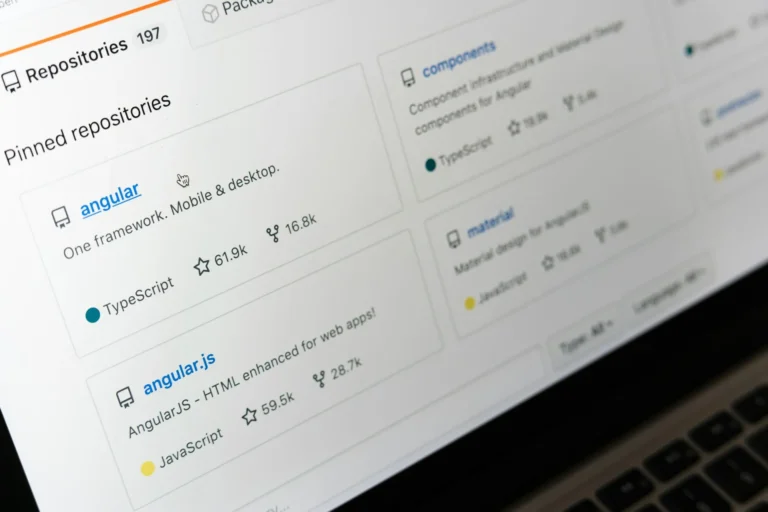
- Select 4–6 projects to pin. These should represent the best work you can show, with preference for projects that solve a real problem.
- For each pinned repo: write or rewrite the README. Include what the project does, what it’s built with, how to run it, and, most powerfully, what challenge you solved while building it.
- Add at least one screenshot or short GIF demo to your two most impressive projects.
Day 3–4: Resume Reconstruction
Your resume has one job: get you an interview. Not a job, an interview. Every word should serve that goal.
The structure that works for junior developers:
- Header: Name, location, email, LinkedIn URL, GitHub URL, portfolio URL. Nothing else.
- Summary (3 sentences max): Who you are, what you build, what you’re looking for. Include your primary technical keyword naturally.
- Skills: Grouped by category (Languages, Frameworks, Tools, Databases). List only what you can discuss confidently in an interview.
- Projects (this is your experience section): 3–4 projects, each with a name, a one-sentence description of what it does, and 2–3 bullet points starting with strong action verbs: Built, Designed, Integrated, Reduced, Automated. Include the tech stack and a link to the live demo or GitHub repo.
- Education: Degree, bootcamp, or self-taught path. Keep it brief.
- Work Experience (if any): Even unrelated experience shows reliability, communication, and real-world context. Frame responsibilities in terms of transferable skills: “Managed high-pressure customer escalations” translates to communication and problem-solving.
Day 3: Draft every section in a Google Doc or Notion before touching any template.
Day 4: Format it. Use a clean, ATS-friendly layout, no tables, no columns, no icons. Helvetica or Inter, 10–11pt, 1 page. Export as PDF.
Day 5–6: Portfolio Foundation
Your portfolio doesn’t need to be a masterpiece. It needs to exist, load fast, and clearly communicate who you are and what you build.
Minimum viable portfolio includes:
- A clear headline (“Full Stack Developer | React & Node.js”)
- A brief about section with your story, why you code, what drives you, where you’re headed
- 3–4 featured projects with descriptions, tech stacks, live links, and GitHub links
- Contact section with every channel a recruiter might use to reach you
- A downloadable PDF resume
Day 5: Get the structure up, even if unstyled. Content first.
Day 6: Polish the design. Keep it simple. A clean, fast-loading site in plain HTML/CSS beats a bloated React app that takes 4 seconds to render.
Day 7: LinkedIn Overhaul
LinkedIn is where recruiters find you. Your GitHub is where they verify you. Your portfolio is where they’re impressed by you. Treat each platform as a different chapter of the same story.
LinkedIn Day 7 checklist:
- Professional photo (same one as GitHub, consistency builds recognition)
- Headline that goes beyond “Student” or “Aspiring Developer”, try “Junior Full Stack Developer | React · Node.js · PostgreSQL | Open to Opportunities”
- About section (3–5 short paragraphs): your background, what you build, what you’re looking for, what makes you different
- Featured section: link to your portfolio and your two strongest GitHub projects
- Experience: mirror your resume, add slightly more context where the character limit allows
- Skills: add 10–15 relevant technical skills, these feed LinkedIn’s search algorithm
- Open to Work: enable it, select your target roles and locations, and make it visible to recruiters

Week 2 — Go Public
Your materials are ready. Now you build a presence. Week 2 is about making your name findable, earning small wins that compound over time, and starting the conversations that will eventually turn into referrals.
Day 8–9: Publish Your First Technical Post
Pick one thing you learned in the past month, a concept that confused you, a bug you spent hours tracking down, a tool you just discovered, and write about it. 400–600 words is plenty. This is not a comprehensive guide. This is a developer sharing what they learned.
Publish it on Dev.to or Hashnode. Tag it with the relevant technologies. Share the link on LinkedIn with a two-sentence context about why you wrote it.
This post will not go viral. That’s not the point. The point is that you now have a public signal that you engage with your craft in writing, and writing is one of the most underrated skills in the entire industry.
Day 8: Draft and edit the post.
Day 9: Publish, share on LinkedIn, and reply to every comment.
Day 10–11: Make Your First Open Source Contribution
Go to GitHub Explore. Filter by “good first issue.” Find a project, any project you use or find interesting, where you can make a small, genuine contribution. Fix a typo in documentation. Improve a README. Add a test for an uncovered function.
Open the PR. Write a clear, respectful PR description. Then wait.
Even if the PR isn’t merged immediately, you now have a contribution in your history, a real, public signal that you can work in an existing codebase and communicate professionally with other developers.
Day 10: Find the project and issue. Set up the repo locally.
Day 11: Make the change, write the PR description, submit.
Day 12–13: Start Showing Up in Communities
Pick two developer communities where your target stack is active, a Discord server, a Subreddit, a LinkedIn group, or a specific Twitter/X hashtag community.
Spend 30 minutes each day for these two days doing one thing: answering questions. Not posting your portfolio. Not announcing you’re looking for a job. Just finding questions you can answer from genuine knowledge and writing a clear, helpful response.
This is the quietest form of networking that exists. Over weeks and months, consistent presence in a community makes you a recognizable name. In the short term, it gets your thinking in front of people who hire developers.
Day 14: Reconnect with Your Existing Network
Before you start cold-applying, go warm. Spend Day 14 reaching out to people you already know, former classmates, bootcamp cohort members, professors, collaborators, colleagues from previous jobs, with a short, honest message:
“Hey [Name], I’m actively looking for my first developer role right now. I’d love to hear if you know of anything, or if there’s someone you think I should talk to. No pressure at all, just wanted to reach out before I dive into the broader job search.”
Short. Honest. Easy to respond to. Send 10–15 of these. The goal is not to find a job today, it’s to activate the network that already knows and trusts you before spending energy on people who don’t.
Week 3 — Apply with Precision
This is where most junior developers start, and why most junior developers stall. Applying without foundation is like handing out business cards with no name on them. Your Week 1 and Week 2 work changes everything about how your applications land.
The Targeted vs. Mass Application Decision
There are two schools of thought on job applications:
Mass applications (spray and pray): Apply to as many postings as possible, keep the process fast, and let the numbers work in your favor.
Targeted applications: Research each company carefully, customize every application meaningfully, and apply to fewer roles with significantly more context and intent.
For most junior developers, a hybrid approach works best: a small batch of highly targeted applications (3–5 per week) combined with a broader batch of standard applications (10–15 per week). The targeted ones are your priority, and each one gets a customized cover note. The broader batch uses your polished baseline resume without modification.
Day 15–16: Build Your Target List
Before sending a single application, build a prioritized list of companies you genuinely want to work for.
Research criteria:
- Tech stack alignment: Do they use technologies you know or are actively developing?
- Engineering culture signals: Do they have a developer blog? Do their engineers write publicly? Is their GitHub active?
- Size and stage: Early-stage startups often care more about ability and drive than years of experience. Mid-size companies often have more structured onboarding. Enterprise companies have more process and stability.
- Growth signals: Are they hiring multiple roles? Have they recently raised funding? Are they expanding into new markets?
Aim for a list of 20–30 companies at varying sizes and stages. This gives you enough pipeline to stay busy without spreading your research too thin.
Day 17–19: The Application Workflow
For each targeted application:
- Read the job posting twice, once for requirements, once for culture signals
- Research the company: their product, recent news, engineering blog, tech stack (StackShare is useful here)
- Write a 3-paragraph cover note: what you build → why this company specifically → what you bring
- Customize your resume summary to mirror the language of the job posting (ATS optimization)
- Apply through the company’s direct careers page, not third-party aggregators, when possible
For standard applications: Apply through LinkedIn Easy Apply, Wellfound (formerly AngelList), or relevant job boards for your target stack. Keep your resume as your strongest version and skip the cover letter unless the application specifically requests one.
Day 17: Apply to 3 targeted roles.
Day 18: Apply to 10 standard roles.
Day 19: Apply to 3 more targeted roles, follow up on any Day 17 applications that bounced or had issues.
Day 20–21: Track Everything and Refine
By now you have applications in flight. The worst thing you can do is let them go dark.
Build a simple application tracker (a spreadsheet is fine) with columns for: Company, Role, Date Applied, Status, Contact (if any), Next Action, and Notes. Update it after every touchpoint.
Day 20: Set up your tracker, log all applications to date, and identify any companies where you can find a warm contact via LinkedIn (a 2nd-degree connection at the company, a mutual LinkedIn connection, or someone who posted about working there).
Day 21: For 3–5 of your most prioritized applications, find the LinkedIn profile of the hiring manager or a relevant engineer on the team. Send a short, non-pushy connection request with a message: “Hi [Name], I recently applied for the [Role] at [Company] and wanted to connect. I’ve been following your team’s work on [specific thing] and would love to be on your radar.”
This is not cold outreach. It’s a warm signal that you did your research and you’re serious.
Week 4 — Interview Mode
Whether you have interviews scheduled by now or not, Week 4 is interview preparation week. Applications take time to process, and the work you do this week pays off in conversations that happen this week and over the next several.
Day 22–23: Technical Interview Foundations
Most junior developer technical interviews involve a mix of:
- Live coding challenges, typically algorithm or data structure problems on platforms like LeetCode, HackerRank, or CodeSignal
- Take-home projects, a small feature or app to build over 24–72 hours
- Code review or debugging, reviewing a snippet of code and explaining what you’d change and why
- System design (lightweight), at junior level, usually “how would you structure this simple application?” rather than distributed systems
Day 22: Spend 2 focused hours on LeetCode Easy problems, specifically array manipulation, string problems, and basic hash map usage. These cover the majority of what junior-level live coding assessments actually test.
Day 23: Practice talking through your solutions out loud. This is the part most candidates skip. The quality of your explanation often matters as much as whether you reach the optimal solution. Record yourself if it helps, you’ll immediately notice where you lose clarity.
Day 24–25: Behavioral Interview Preparation
Behavioral questions are not soft questions. They’re structured assessments of how you think, how you handle difficulty, and whether you’ll be a constructive teammate. Prepare for them with the same rigor as technical questions.
The STAR format (Situation, Task, Action, Result) applied to developer contexts:
Prepare one story each for:
- A time you got stuck on a technical problem and how you worked through it
- A project you’re most proud of and why
- A time you had to learn something new quickly under pressure
- A mistake you made and what you learned from it
- Why you’re transitioning into or pursuing software development
These five stories cover 80% of behavioral questions you’ll encounter at the junior level.
Day 24: Draft your five STAR stories in writing.
Day 25: Practice saying them out loud, not memorizing, but internalizing. You want the stories to feel natural, not rehearsed.
Day 26–27: Mock Interviews
Do at least two mock interviews before you walk into a real one.
Options:
- Pramp: Free peer-to-peer technical mock interviews matched by skill level
- Interviewing.io: Anonymous mock interviews with engineers from top companies
- A trusted peer: Ask a developer friend to give you 45 minutes. Treat it like the real thing, camera on, no notes, timer running.
- Yourself: Set a LeetCode problem, open a blank editor, start a timer, and talk through your solution out loud.
Day 26: One technical mock interview.
Day 27: One behavioral mock interview. Ask for honest feedback. Don’t defend yourself.
Day 28–30: Respond, Iterate, and Stay in Motion
By Day 28, you should have some applications with active status, screening calls scheduled, recruiter conversations, or at minimum, responses to follow up on. This is also the week where the slower applications from Week 3 start moving.
Day 28: Follow up on applications that have been silent for more than 7 business days with a single, polite check-in email: “Hi [Name], I wanted to follow up on my application for [Role] submitted on [Date]. I’m still very interested in the opportunity and would welcome any update on timing. Thank you for your time.”
Day 29: Apply another batch of 10–15 roles. The pipeline always needs to be fed. Don’t wait for current applications to resolve before adding new ones.
Day 30: Do a full review. What’s working? Where are you getting traction and where are you hitting silence? If you’re getting screening calls but not moving forward, the resume is working but the interview needs work. If you’re not getting screening calls at all, the signal problem is in your materials or targeting. Use the evidence to recalibrate, not to despair.
The Mindset Layer: What Nobody Tells You About Month One
The 30-day plan above gives you structure. But structure without the right mental framework collapses under the weight of rejection, and rejection is a guaranteed part of this process.
Rejection is data, not verdict. A company that doesn’t respond to your application has told you nothing meaningful about your worth as a developer. It has told you about its process, its pipeline, its timing, and its current priorities, none of which are about you personally.
Progress is invisible until it isn’t. The work you do in Week 1 won’t produce interviews. The work you do in Week 2 won’t either. The compounding effect of clean materials, public presence, and consistent applications only becomes visible over time, often all at once, when multiple opportunities suddenly converge. Don’t measure results on a daily timeline.
Your first job is not your forever job. The pressure to land the perfect first role can be paralyzing. Reframe the goal: land a role where you can learn, ship real code, and grow. The first job is a launchpad, not a destination. A developer who gets their first offer at a mid-size company and spends two years shipping real features is ahead of one still waiting for a FAANG callback.
Take care of the person doing the job search. 30 days of focused job searching is genuinely hard work. Sleep. Move. Talk to people outside of tech. The developers who land offers aren’t the ones who grind themselves into despair, they’re the ones who stay consistent without burning out.
What Comes After Day 30
Day 30 is not a finish line. It’s the end of a runway, the point at which the habits, materials, and momentum you’ve built are self-sustaining.
If you have an offer: congratulations. Now negotiate it. Know your market rate, know your worth, and remember that almost everything in an offer letter is negotiable for the right candidate at the right company. Salary, start date, remote flexibility, signing bonus, and professional development budget are all fair game to discuss.
If you’re in process: stay warm with every active conversation. Keep applying. Keep showing up in communities. Keep writing, building, and contributing. The pipeline has to stay in motion even when specific conversations are promising, until the signed offer is in your inbox.
If you’re still waiting: extend the plan. Use the Week 3 and Week 4 rhythm as a repeating cycle. Audit your materials with fresh eyes or ask a trusted mentor to review them. Consider whether your target roles and companies are well-matched to where you actually are technically. And keep going, because the one thing that separates developers who land their first job from those who don’t is almost always simply this: they didn’t stop.
Final Thoughts
Thirty days, clearly sequenced, with honest effort and smart targeting, can move you from invisible to in-process. Not guaranteed to be hired, that would be a lie. But from invisible to in-process is a transformation that changes everything. Because once you’re in the room, the job is yours to win.
You know how to learn hard things. You’ve already proven that by getting here. Apply the same systematic approach to the job search itself, and the offer follows.
Week 1 starts now.
Know someone staring at their screen wondering where to start? Send this to them. The 30-day clock starts whenever they’re ready.