

Networking for Developers Who Hate Networking
If the word “networking” makes you want to close your laptop and never attend another tech meetup again, you’re not alone. For many developers (especially those who lean introverted) the traditional idea of networking feels performative, exhausting, and frankly, a little fake.
But here’s the thing: networking for developers doesn’t have to look like a room full of people exchanging business cards over bad coffee. In fact, the most effective networking strategies for technical profiles are quiet, digital, and built around value, not small talk.
This guide is for programmers who want to grow their professional circle authentically, without pretending to be someone they’re not.
1. Why Developers Need a Network (Even If They Don’t Want One)
Let’s get the uncomfortable truth out of the way: your technical skills will only take you so far. At some point, whether it’s landing a new job, finding your first client, getting a promotion, or growing an open source project, who you know matters as much as what you know.
Consider this:
- The majority of jobs, including tech jobs, are filled through referrals, not job boards
- The best freelance opportunities rarely get posted publicly; they travel through trust networks
- Getting code reviews, mentorship, or collaboration on side projects almost always comes through community connections
This doesn’t mean you need to become a social butterfly. It means you need a small, genuine network, not a massive one. And that’s very achievable, even if you consider yourself deeply introverted.
The goal of networking as a developer isn’t to collect contacts. It’s to build relationships where mutual value exists.
2. Reframing What Networking Actually Means
Most developers hate networking because they’re picturing the wrong thing: a forced cocktail party where everyone talks loudly about their “synergies” and hands out business cards nobody will read.
That version of networking is optional. And mostly ineffective anyway.
Real networking looks like:
- Answering a question thoughtfully in a Discord server
- Writing a blog post that someone bookmarks and shares six months later
- Leaving a helpful comment on another developer’s GitHub issue
- Replying to a tweet about a problem you’ve solved before
- DMing someone to say their open source project helped you ship a feature
Notice what all of these have in common: they start with giving, not taking. That’s the mindset shift that makes networking feel natural for developers. Stop thinking about what you can get from a connection and start thinking about what insight, help, or perspective you can offer.
This approach plays directly to a developer’s natural strengths, problem-solving, precision, and depth of knowledge.

3. The Introvert’s Advantage in Digital Networking
Here’s something the networking industry doesn’t talk about enough: introverts are often better at digital networking than extroverts. Why?
- You think before you speak, which means your written contributions tend to be more thoughtful and useful
- You prefer depth over breadth, leading to fewer but more meaningful connections
- You’re comfortable with asynchronous communication, the default mode of the internet
- You listen well, which makes people feel heard and valued
- You’re drawn to niche communities, where the most engaged, high-quality connections live
The entire internet is essentially an introvert’s networking paradise. You can contribute to your schedule, in your own words, with time to think. You never have to make eye contact with anyone.
The key is knowing where to show up and how to add value consistently.
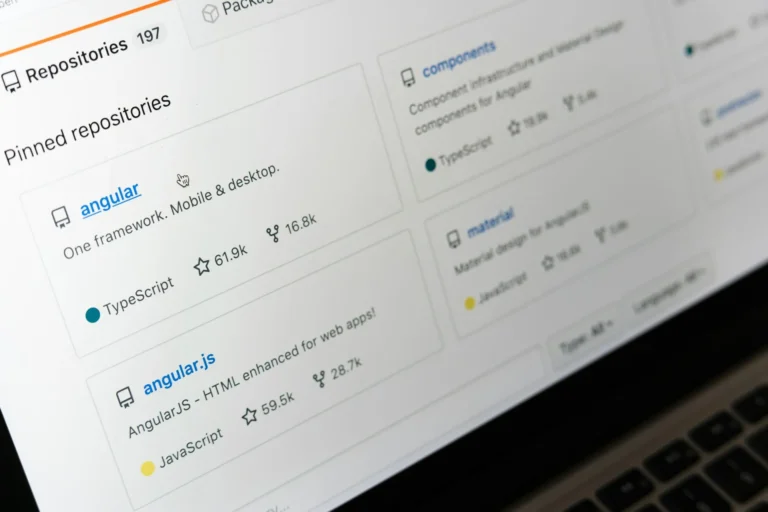
4. GitHub as a Networking Tool (Not Just a Code Host)
Most developers think of GitHub as version control. But used intentionally, GitHub is one of the best networking platforms available to technical profiles.
How GitHub Creates Connections Organically
Starring and watching repositories: When you start a project, the maintainer gets notified. If you do it consistently on niche projects, the creator often notices, especially in smaller communities.
Opening quality issues: A well-written bug report or feature request isn’t just helpful, it’s a warm introduction. You’re demonstrating that you use and care about their work. Many collaborations start here.
Pull requests: Submitting a thoughtful PR (even a small one) opens a technical conversation with the maintainer. Maintainers remember contributors who communicate clearly and follow conventions.
Discussions tab: Many repositories now use GitHub Discussions as a forum. Participating here is low-stakes, technical, and highly visible to the project’s core team.
Following developers: GitHub’s following feature is underrated. Follow engineers whose work you admire, watch what they start, and engage with their repositories. It’s a quiet but real signal.
Every meaningful interaction on GitHub is a networking touchpoint that feels like engineering, because it is.
5. How to Network Through Writing
Writing is the introvert’s superpower, and it’s one of the most scalable networking tools that exists. A single well-written article can introduce you to thousands of people, attract collaborators, and establish your authority in a niche, all while you sleep.
Platforms to Publish On
Dev.to: The most developer-friendly blogging platform. Has a built-in audience of technical readers, supports tags and series, and has a reactions/comments system that sparks real conversations.
Hashnode: Lets you publish on your own domain while tapping into their network. Great for SEO and personal brand building simultaneously.
Medium: Broader audience, less technical by default, but large enough that niche developer content still finds its readers through publications like Better Programming or The Startup.
Your own blog: The highest-effort option but the best for long-term brand building and search discoverability.
What to Write About
You don’t need to reinvent the wheel. The most-shared developer content tends to be:
- Tutorials solving a specific problem, you personally ran into (“How I fixed X in Y framework”)
- Comparisons and honest opinions, (“Prisma vs Drizzle, after 6 months in production”)
- Lessons from building a project, failures included, which are often more valuable than successes
- Explainers of concepts, you recently learned, written for the version of yourself that didn’t know them
- Opinions on tools, workflows, or industry trends, these spark conversations
The networking payoff from writing: When people share your article, comment on it, or reach out to say it helped them, you have a natural, non-awkward opening for a real conversation. The connection starts with value already established.
6. Twitter/X, Bluesky, and LinkedIn: Which Platform Is Worth Your Time
Social media is often the most overwhelming part of online networking for introverted developers. The key is to pick one platform and use it with intention rather than trying to be everywhere and burning out.
Twitter/X
Still home to a vibrant developer community despite its turbulence. Particularly strong for:
- Real-time conversations about tools, frameworks, and industry news
- “Building in public” sharing your progress as you build projects
- Quick tips, threads, and short-form technical content
- Following and engaging with influential engineers and open source maintainers
Introvert-friendly tip: You don’t have to tweet original content daily. Simply replying thoughtfully to other developers’ posts, adding context, sharing your experience, or asking a genuine question, builds your presence gradually without the pressure of constant content creation.
Bluesky
Growing fast as a developer-friendly alternative. More curated, less algorithmic noise, and the developer community there tends to be more engaged and less performative. Worth exploring if Twitter/X feels too chaotic.
Often overlooked by developers but increasingly important for career networking. Best practices for technical profiles:
- Write posts about what you’re building, learning, or shipping, not just job announcements
- Engage thoughtfully with posts from people in your target industry or company
- Connect with recruiters, but also with engineers and engineering managers whose content resonates with you
- Share your Dev.to or blog articles here, they perform well on LinkedIn’s algorithm
The golden rule for all platforms: React less, respond more. A reply is worth ten likes when it comes to building actual relationships.

7. Community-Based Networking: Discord, Slack, and Forums
For introverted developers, niche communities are the most natural networking environment. They’re topic-focused, low-pressure, asynchronous by default, and full of people who share your specific interests.
Finding the Right Communities
Almost every major framework, tool, or language has an official or unofficial community:
- Discord: Reactiflux (React), Prisma, Supabase, Laravel, Python Discord, The Programmer’s Hangout
- Slack: Rands Leadership Slack, Online Geniuses (for developers in marketing tech), local tech community Slacks
- Reddit: r/webdev, r/programming, r/learnprogramming, r/cscareerquestions
- Specialized forums: Indie Hackers (for developer-entrepreneurs), Lobste.rs (curated tech news), Hacker News
How to Show Up Effectively (Without Feeling Like You’re Performing)
- Lurk first, then contribute. Spend a week reading before posting. Understand the culture, the inside jokes, the recurring questions.
- Answer questions in your area of expertise. This is the most natural entry point, you’re helping, not selling yourself.
- Ask specific, well-researched questions. A detailed question that shows you’ve done your homework earns respect in technical communities.
- Avoid the “spray and pray” approach. Being genuinely active in 2 communities beats being passive in 20.
Over time, consistent contributors in communities become known, not because they networked aggressively, but because they were reliably helpful.
8. Contributing to Open Source as a Relationship Builder
Open source contribution is networking in disguise. Every PR, issue, or discussion is a professional interaction that builds your reputation in a community.
The Relationship-Building Arc of Open Source
- You use a project and run into a bug or limitation
- You open a clear, helpful issue, introducing yourself naturally
- You submit a PR to fix it, demonstrating your skills in context
- The maintainer reviews your code, a technical conversation begins
- Your contribution is merged, you’re now a contributor with social proof
- You continue contributing, you become part of the inner circle
This process is slow and genuine, which is exactly why it builds the most durable professional relationships. Maintainers of popular projects are often senior engineers, CTOs, or respected community figures. A shared pull request history is a warmer introduction than any cold LinkedIn message.
Starting Small and Strategically
Focus on projects that:
- You genuinely use in your day-to-day work
- Are small enough that your contribution will be noticed (avoid React core as your first PR)
- Have active maintainers who respond to issues
- Have a CONTRIBUTING.md guide, this signals they’re organized and open to contributors
9. Conferences and Meetups, Surviving Them as an Introvert
Sometimes you’ll want (or need) to attend in-person events. This doesn’t have to be an ordeal. With the right strategy, even deep introverts can walk away from a conference with 3–5 meaningful new connections.
Before the Event
- Research speakers and attendees in advance. Follow them on social media, read their work. Walking in with context makes conversations far easier.
- Identify 1–2 specific people you want to talk to. Not 20. Just 1 or 2. This makes the event feel manageable.
- Prepare a simple answer to “What do you work on?” Practice saying it out loud. Something like: “I’m a backend developer focused on API design, I recently shipped a project using FastAPI and PostgreSQL that I’m pretty excited about.”
During the Event
- Arrive early. Counterintuitive but effective, it’s easier to meet people when the room is half-empty and energy is low than when it’s packed and loud.
- Volunteer. Volunteers have a natural role to play, which removes the social ambiguity of “what am I supposed to be doing here.”
- Use sessions as conversation starters. After a talk, “What did you think of that session?” is one of the most natural openers available.
- Give yourself permission to leave. You don’t need to stay for the entire event. Two hours of genuine engagement beats six hours of draining small talk.
After the Event
Connect on LinkedIn or Twitter within 48 hours while the memory is fresh. Reference something specific from your conversation. That’s it, no elaborate follow-up strategy needed.
10. The Follow-Up: How to Maintain Connections Without Feeling Weird
Making an initial connection is the easy part. Maintaining it without feeling like you’re pestering someone is where most introverted developers struggle.
The secret: give before you ask, and give often enough that the relationship doesn’t go cold.
Low-Effort, High-Value Ways to Stay in Touch
- Share an article, repo, or tool you think they’d find useful, with a one-liner about why you thought of them
- Comment genuinely on something they posted (“I ran into the exact same issue with Prisma last month, here’s what worked for me”)
- Congratulate them on a milestone (new job, product launch, major contribution), a single sentence is enough
- Mention them in something you write (“I learned this approach from [Name]’s talk at…”)
What you’re avoiding: Reaching out only when you need something. That pattern, over time, trains people to dread hearing from you. Occasional, value-first touchpoints keep a relationship alive without pressure on either side.
11. A Realistic Weekly Networking Routine for Developers
You don’t need hours per week. You need consistency. Here’s a sustainable routine that takes less than 30 minutes daily:
Monday — Listen
Spend 10 minutes reading posts, threads, or articles from your community. Note anything that prompts a genuine reaction or opinion.
Tuesday — Respond
Reply thoughtfully to 2–3 posts or questions in your communities or on social media. No original content required, just genuine responses.
Wednesday — Create (Optional)
If you have something to share (a project update, a lesson learned, a quick tip) post it. Even a single paragraph with a code snippet counts.
Thursday — GitHub Day
Spend 15 minutes on GitHub. Browse issues in projects you use. Star new repos. If something catches your eye, leave a comment or open an issue.
Friday — Reach Out
Send one short message to someone in your network. It could be sharing a resource, congratulating them on something, or simply saying their work was helpful. One person per week, 52 genuine touchpoints per year.
That’s it. No events, no public speaking, no cold pitching. Just quiet, consistent presence, which is exactly the kind of networking introverted developers can actually sustain long-term.
Final Thoughts
The best professional network you can build as a developer isn’t the biggest one, it’s the most genuine one. A handful of people who respect your work, trust your judgment, and will vouch for you when it counts is worth more than a thousand LinkedIn connections who don’t remember your name.
Networking for introverted programmers isn’t about changing who you are. It’s about using the skills you already have, thoughtfulness, precision, depth, and the ability to communicate clearly in writing, in places where those qualities are valued.
Start with one platform. Help one person. Write one post. The network follows from that.
Found this useful? Share it with a developer friend who keeps saying “I’m just not good at networking”, this one’s for them.