

The 7-Step Tech Job Search System That Actually Works in 2026 (Even in a Brutal Market)
The 7-step tech job search system is the difference between applying every day and actually landing interviews in 2026. Most searches fail for the same reason, and it’s not the one people assume. It isn’t that the candidate is unqualified, and it isn’t that they didn’t apply enough. It’s that there was never a system in the first place.
You know the routine: open LinkedIn, apply, refresh, apply again, check email, feel nothing, repeat tomorrow. That’s not a strategy. It’s a slot machine. And in 2026 the slot machine pays out less than ever, because the machine itself has changed.
This article gives you the alternative: a repeatable, 7-step system you can run every week until the offer shows up. No motivational fluff, just the sequence that actually moves the needle.

Why the Old Job Search Playbook Is Dead in 2026
The advice you got a few years ago is quietly sabotaging you today. The market shifted, and most job seekers never updated their approach. Here’s what actually changed:
- AI screens before humans do. The majority of companies now run resumes through AI screening before a recruiter ever opens them. The first “person” reading your application often isn’t a person at all.
- Hiring is skills-first, not degree-first. Employers increasingly care about what you can demonstrably do, not where you studied or which titles you once held.
- Ghost jobs are everywhere. A huge share of postings are never seriously filled, so applying blindly means pouring effort into roles that don’t really exist.
- It’s a “low-hire, low-fire” economy. Companies are cautious, and fewer openings means each application faces far more competition.
Applying harder inside a broken process just gets you tired. You don’t need more effort. You need a system.

What a System Actually Changes
A random job search feels emotional, so every rejection lands personally. A system feels operational, and rejections become data instead of verdicts. When you run a process, you stop asking “What’s wrong with me?“ and start asking “Which step needs work?” That single shift is the difference between burning out and breaking through.
Here are the seven steps.
Step 1: Define a Sharp Professional Identity
Before you touch a single application, decide who you are in the market. Not everything you can do, but what you actually want to be hired for. A recruiter should understand your value in seconds: what role you want, what stack you use, and what level you’re targeting.
Vague positioning kills you first. Compare these two:
- Bad: “Frontend | Backend | Data | AI | Cybersecurity | Open to anything.”
- Better: “Frontend Developer specializing in React and TypeScript, targeting junior roles.”
Specialization creates clarity, clarity creates trust, and trust creates interviews. You can always expand later; right now you need to be findable and understandable.
Step 2: Build Proof of Skill, Not Just a Resume
In a skills-first market, claims are cheap and evidence wins. Employers now assume anyone can write a polished resume with AI, so what they really want is proof they can’t fake. Your job is to produce it:
- 2–3 real projects that solve a recognizable problem, not tutorial clones.
- Deployed and accessible, with working links rather than just screenshots.
- A clear README explaining what it does, why, and how it’s built.
- A short walkthrough — a Loom video or written case study that shows your thinking.
One deep, well-explained project beats ten half-finished ones. Think of every project as an answer to a single recruiter question: “Can this person actually do the work?”

Step 3: Engineer a Resume That Survives AI Screening
Your resume now has two audiences: an algorithm first, then a human. You have to pass both, and each one wants something different.
To pass the AI screen, match the terminology in the job posting naturally (if they say “REST APIs,” don’t only write “web services”), use standard section headings like Skills, Experience, Projects, and Education, keep the formatting simple with no tables or unusual fonts that parsers misread, and export as PDF unless told otherwise.
To impress the human who reads it next, lead with measurable results instead of duties and show impact with real numbers wherever it’s honest:
- Weak: “Built a web app using React.”
- Strong: “Built a task-tracking app in React and Firebase that lets users manage projects and deadlines in real time; used by 40+ beta testers.”
One warning for 2026: don’t paste a job description into a chatbot and submit the raw output. Recruiters are actively rejecting generic, AI-written resumes. Use AI to draft, then edit heavily with your real voice, your real details, and your real metrics. The goal isn’t to sound impressive — it’s to be believable.
Step 4: Optimize Your Public Footprint
When your resume passes, the recruiter’s next move is predictable: they Google you, open LinkedIn, and check GitHub. If those don’t match your resume, or if they look abandoned, the doubt creeps in.
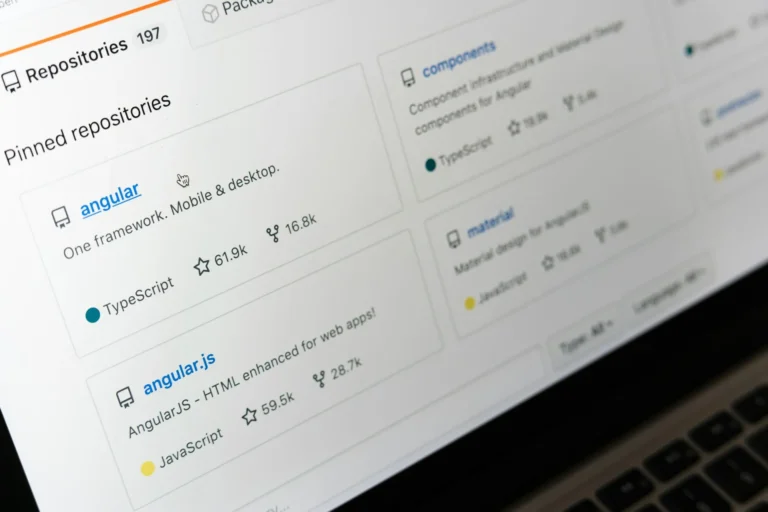
Your LinkedIn should use a clear, role-specific headline that mirrors your Step 1 identity, a summary that says what you do and who you help, and a list of your real projects and skills. Your GitHub should pin your best repositories, show readable READMEs and meaningful commits, and look active rather than like a graveyard of forks.
Recruiters aren’t checking whether you code like a senior engineer; they’re checking whether you look employable. Consistency across your resume, LinkedIn, and GitHub is what quietly builds that credibility.
Step 5: Apply With a Target List, Not a Spray
This is where most people sabotage themselves. Silence creates anxiety, anxiety creates desperation, and desperation creates 200 low-effort applications. Mass applying feels productive, but it rarely is.
Instead, build a target list of 15–25 companies that realistically fit your level and stack, with roles you can genuinely map your skills to, and applications customized enough to pass the AI screen and read as intentional. At the same time, learn to spot ghost jobs before you waste energy on them — the ones reposted repeatedly over months, with vague responsibilities, no clear team, and no named hiring manager anywhere.
Twenty strong, targeted applications will almost always beat a hundred weak ones.

Step 6: Turn Networking Into Warm Entry Points
The cold application is the hardest door in tech hiring, and the warm introduction is the easiest. Referrals consistently outperform blind applications, and networking is simply how you create them.
Networking doesn’t mean begging strangers for jobs. It means becoming recognizable before you need something: posting occasionally about what you’re building or learning, commenting thoughtfully on other developers’ work, reaching out to people at your target companies with a specific and human message instead of a copy-paste, and helping others when you can.
The developers who get interviews faster usually aren’t the loudest ones. They’re the ones who created a little familiarity before the opportunity ever appeared. One genuine connection at a target company can do more than fifty applications.
Step 7: Run It Like a Weekly Operating System
A system only works if you actually run it — on a schedule, not on a mood. Turn the search into a weekly rhythm and it stops feeling like chaos.
Track everything in one simple sheet: every application, contact, and response. Block fixed hours for applying, building, and networking so the search doesn’t sprawl across your entire day. Review the funnel once a week to see where candidates drop off — is it the screen, the recruiter reply, or the interview? Then iterate on the weak step: no callbacks means fixing the resume and positioning, while callbacks but no interviews means fixing the screening call.
This is how you replace panic with progress. You stop measuring yourself by feelings and start measuring by the funnel — and the funnel can always be improved.
Final Thoughts
If your job search feels like chaos, more effort won’t fix it — structure will. A sharp identity, real proof of skill, a resume built for both AI and humans, a clean public footprint, a focused target list, warm introductions, and a weekly rhythm that keeps it all moving.
None of these steps require genius, and all of them are controllable — which is exactly where progress lives. The candidates who win in 2026 aren’t the ones who apply the most. They’re the ones running a system while everyone else is still pulling the slot machine.