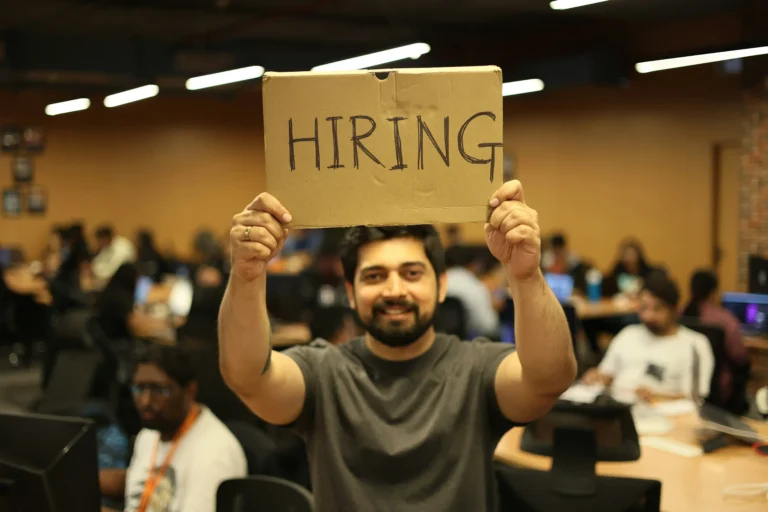


The FASTEST Way to Learn to Code & Get a Job
Are you tired of “Tutorial Hell”? Do you feel like you’re spinning your wheels, watching endless YouTube videos but still unable to build a basic app? This 2026 roadmap shows the fastest way to learn to code, build a portfolio, and get hired in 5 months.
The tech industry is evolving rapidly, and while the job market has become more competitive, the demand for skilled developers remains high. However, the old way of learning, spending four years in a degree program or six months wandering through random tutorials, is no longer the most efficient path.
Choose One Path and Narrow Your Focus
The biggest mistake beginners make is trying to learn “everything.” They jump from Python to Java to C++ and end up mastering nothing. To get a job fast, you must pick a niche.
Front-End Development: (The Fastest Path) Focus on what users see. Tools: HTML, CSS, JavaScript, and React.
Back-End Development: Focus on servers and databases. Tools: Node.js, Python, or Ruby.
Data Science/AI: Focus on data analysis. Tools: Python, SQL, and R.
Recommendation: If your goal is to get a job as quickly as possible, Front-End Development is usually the most accessible entry point.

Master the "Big Three" (The Foundations)
Don’t touch a framework until you understand the basics. For web development, you need to spend your first 4–6 weeks obsessing over:
HTML5: The skeleton of the web.
CSS3: The styling (focus on Flexbox and Grid).
JavaScript (ES6+): The logic. This is the most important part. Learn variables, loops, functions, and DOM manipulation.
Escape "Tutorial Hell" with Project-Based Learning
Watching a tutorial and copying code is “passive learning.” It creates an illusion of competence. To learn fast, you need active learning.
As soon as you learn a new concept, build something small with it.
Learned HTML/CSS? Build a personal link-in-bio page.
Learned JavaScript functions? Build a tip calculator.
Learned APIs? Build a weather app that pulls real-time data.
The Golden Rule: Spend 20% of your time watching/reading and 80% of your time coding.

Build a "Proof of Work" Portfolio
Employers don’t care about your certificates; they care about what you can build. Your portfolio should live on GitHub and a personal website.
To stand out, avoid “generic” projects like To-Do lists or Weather apps. Instead, build:
A CRUD Application: (Create, Read, Update, Delete) e.g., A specialized job board or a social media clone.
An API Integration: A site that uses a real-world API (like Spotify or Google Maps).
A Freelance Project: Build a real website for a local business or a non-profit for free. Having a “live” site for a real client is the ultimate resume booster.
Optimize Your Digital Presence (The Job Hunt)
Once you have 3 solid projects, it’s time to market yourself.
GitHub: Commit code daily. A green “contribution heat map” shows employers you are consistent and disciplined.
LinkedIn: Optimize your profile with keywords like “Frontend Developer,” “JavaScript,” and “React.” Connect with recruiters and developers at companies you admire.
The Resume: Use a clean, ATS-friendly (Applicant Tracking System) template. Focus on the impact of your projects rather than just the tools used.
The Networking Shortcut
Applying to 100 jobs on Indeed is the slowest way to get hired. Networking is the shortcut.
Twitter/X & BlueSky: Join the #100DaysOfCode community.
Meetups: Attend local tech meetups or hackathons.
Cold Outreach: Send a polite message to a senior developer at a company you like. Ask for a 15-minute “informational interview” about their career path. This often leads to referrals.
Summary Checklist for Success
Month 1: HTML, CSS, and basic JavaScript.
Month 2: Advanced JavaScript and your first 2 small projects.
Month 3: Learn a framework (React is highly recommended) and Git/GitHub.
Month 4: Build your “Big Three” portfolio projects.
Month 5: Optimize LinkedIn/Resume and start networking/applying.
What next?
If you’re serious about making a career change into tech, Tech Job Coach is designed for people like you. Our consultation service can really save you money and time with real expectations. We’ll analyze your profile and give you the most honest advice on whether a bootcamp, course, or career change is right for you.